Wastewater systems place high demands on pump performance. Whether you work in industrial processing, food production, metalworking or municipal sewer networks, you need a pump solution that handles solids, reduces downtime and keeps maintenance predictable. Two technologies are widely used in wastewater applications: self priming pumps and submersible pumps. Both move wastewater effectively, but their installation, accessibility and long-term service needs differ.
Below we explain the key differences and how each option performs in industrial and municipal wastewater environments.
1. Installation and operational layout
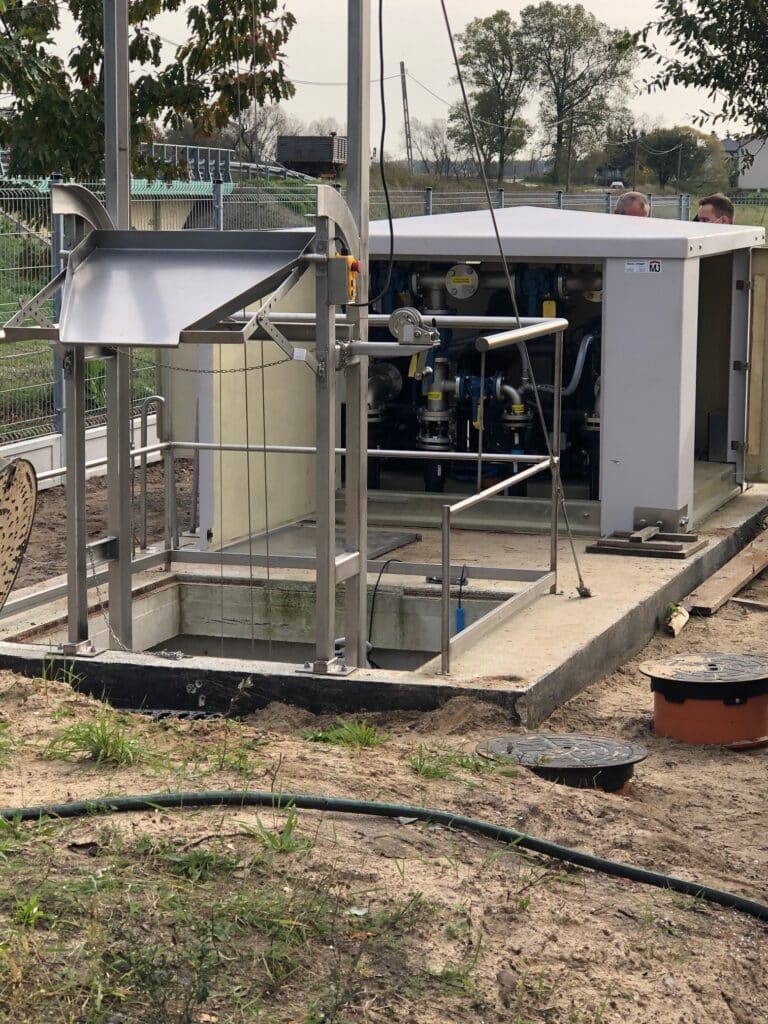
A self priming pump is installed above ground, outside the wet well. The pump draws wastewater through a short, straight suction line positioned close to the fluid level. This layout makes the system easy to integrate into existing treatment facilities, pumping stations or industrial processes.
A submersible pump operates fully underwater, typically in a wet well, sump or wastewater basin. It is mounted at the bottom and connected through guide rails or a baseplate. Electrical and mechanical connections must be reliably sealed, and depending on depth or location, installation often requires a crane or lifting system.
Industrial wastewater examples
Industrial sites deal with a mix of fluids: process water, sludge, fibrous materials and sometimes corrosive liquids. Self priming pumps are often preferred here because they allow quick access when dealing with abrasive wear, unexpected solids or process fluctuations.
Municipal wastewater examples
Municipalities often use submersible pumps when footprint is limited. However, in many above-ground pumping stations, self priming pumps simplify maintenance and keep operators safely outside the wet well.
2. Maintenance and accessibility
Maintenance is the biggest separator between these technologies.
Because self priming pumps are installed above ground, the pump chamber, impeller, seal and check valves are accessible from the outside. Technicians can complete most tasks without entering the wet well and without removing the pump.
Submersible pumps must be lifted out of the well for nearly all service work. This means additional equipment, more labor and more downtime — especially if the site requires confined-space procedures.
For industries producing large volumes of solids, wipes, fats or sludge, easy access can significantly reduce total cost of ownership.
3. Handling solids in wastewater
Wastewater carries solids of all shapes and sizes: rags, debris, grit, food residues and biological material. The ability to handle these efficiently is essential.
Self priming pumps
- Large free passages
- Simple access to clear blockages
- Designed for high solids handling
- Strong performance in industrial environments
Submersible pumps
- Efficient hydraulic design
- Often used for deeper pits or limited space
- Good performance with standard municipal solids
In many heavy-duty industrial wastewater applications, such as food processing, chemical production or metal finishing, self priming pumps offer greater reliability due to easier inspection and clean-out.
4. Scaling and future growth
Industrial and municipal systems evolve. Flow rates increase, solids content changes, and regulations become stricter.
Self priming systems are easy to upgrade:
- Motor power can be increased
- Impeller materials can be changed
- Pump performance can be adjusted
- Additional pumps can be added above ground
Submersible pumps can also be expanded, but major changes often require work inside the wet well, making upgrades more complex.
5. Industrial wastewater: practical reality
Industrial wastewater often contains:
- Fibrous materials
- Oils and fats
- Chemical residues
- Abrasive particles
- Process water with fluctuating solids
Self priming pumps give operators full visibility and direct access, important for keeping processes running and preventing unplanned shutdowns.
For industries such as:
- Food and beverage
- Paper and pulp
- Metal processing
- Chemical production
- Cement and minerals
A self-priming solution reduces complexity and increases control.
6. Municipal wastewater and sewer systems
Municipal wastewater networks deal with variable flows, peak loads and increasing amounts of wipes and non-disposable materials. Reliability and safe maintenance are key.
Self priming pumps in above-ground stations offer:
- Safe and hygienic maintenance outside the wet well
- Faster service interventions
- Reduced risk for operators
- Long service life through dry motor installation
- High availability during peak demand
Submersible pumps still have their place, especially where space is limited or full immersion is required. But for municipalities aiming to improve safety and long-term operating costs, above-ground self priming systems provide clear benefits.
Conclusion
Choosing between self priming pumps and submersible pumps depends on the requirements of your wastewater system. Self priming pumps stand out in accessibility, solids handling and long-term serviceability, especially in industrial and municipal environments where uptime and safety matter. Submersible pumps remain a strong choice when space is limited or immersion is needed.
If you’re exploring the best pumping solution for your wastewater application, our experts at Gorman-Rupp are ready to support you.